
The original version of this report was released in partnership with Splice. Read the full genre hybridization analysis here.
The way music genres evolve has changed dramatically over the past decade. New sounds no longer emerge from a single city, scene, or movement—they're increasingly shaped by producers blending influences from around the world long before audiences recognize them as genres of their own.
To better understand how this happens, Chartmetric partnered with Splice for the first time, combining listener data with creator behavior to examine the full lifecycle of genre evolution. While Chartmetric shows how audiences discover and consume music, Splice reveals how producers build it. Together, the two datasets tell a more complete story of how today's fastest-growing genres are created, spread, and eventually mature.
Traditional Genres Are Giving Way to Hybrids
The dominance of music's largest genres is steadily declining as artists embrace increasingly specific sounds. Across Chartmetric's dataset, traditional genres account for a smaller share of artists than they did just a few years ago, while dozens of emerging genres continue to gain momentum.
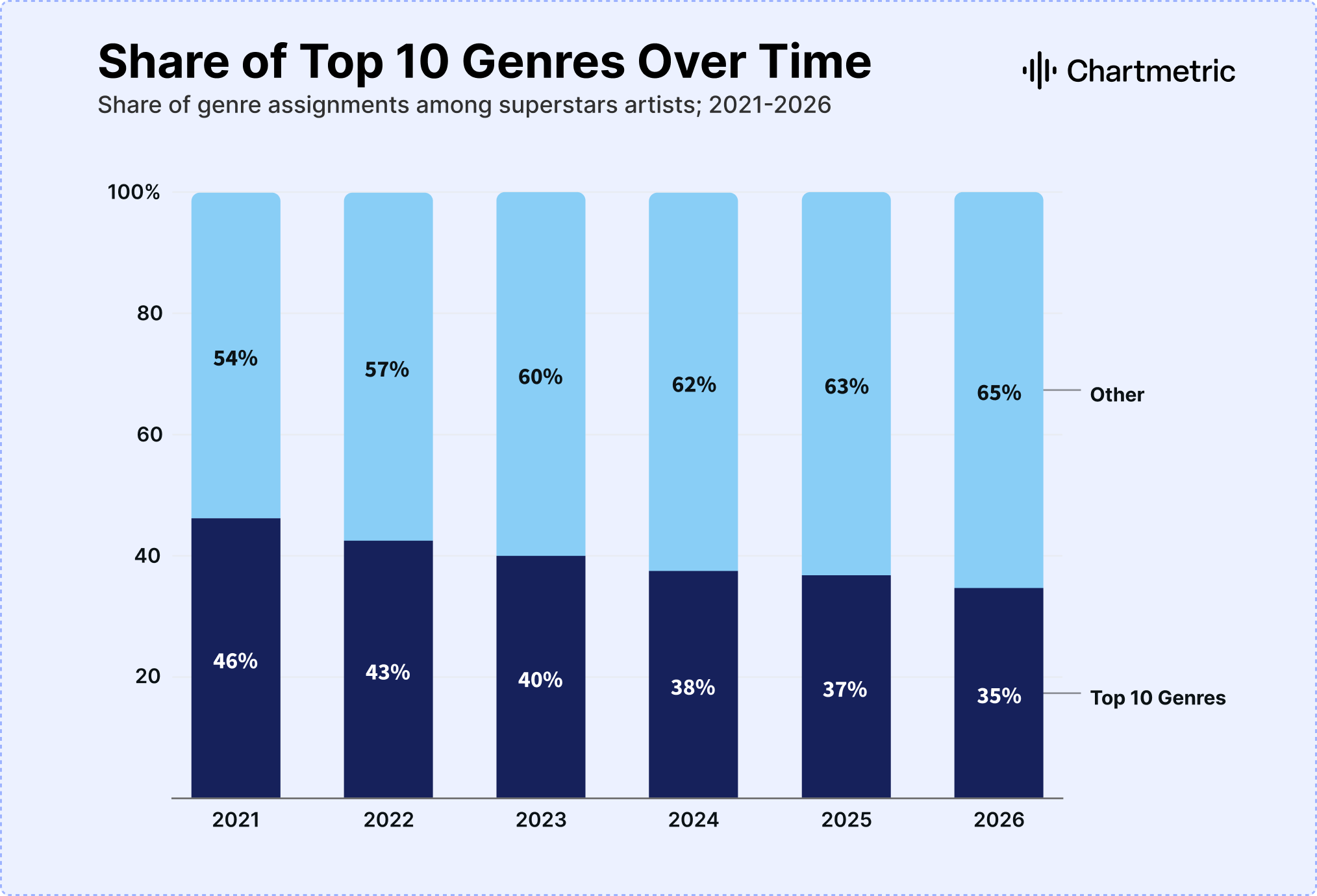
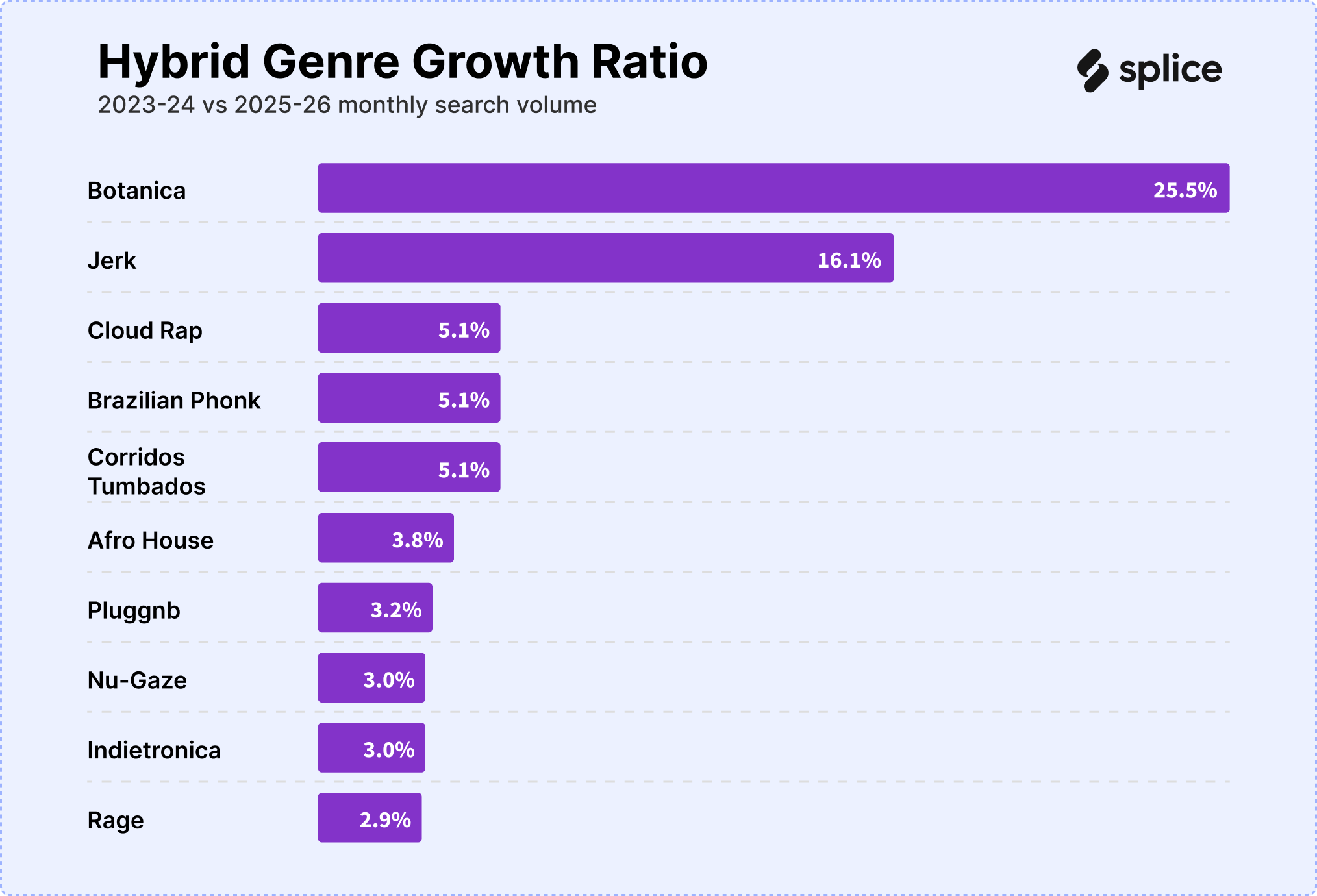
Rather than replacing existing categories, many of today's fastest-growing genres combine multiple musical traditions into something entirely new. On the creator side, the same trend is unfolding as producers download sounds from a wider variety of genres than ever before, suggesting that hybridization begins long before a song reaches streaming services.
Genre Innovation Is Driven by Recombination
Most new genres aren't created from scratch—they're built by combining familiar musical ideas in unexpected ways.
Many of the fastest-growing sounds on Splice blend regional traditions with contemporary production techniques, particularly new electronic elements. At the same time, older internet-born genres are experiencing renewed interest as a new generation of artists reshapes them with fresh influences. Together, these trends suggest that today's genre innovation is driven as much by reinterpretation as it is by invention.
Hybrid Genres Don't All Spread the Same Way
Not every genre follows the same path once it reaches listeners.
Some hybrid genres remain deeply connected to the cultures that created them. Sounds like corridos tumbados, amapiano, and UK drill continue strengthening their home-market audiences even as they achieve international recognition. Others—including hyperpop, lofi, and afro house—spread primarily through online communities, developing global audiences without becoming tied to any single country.
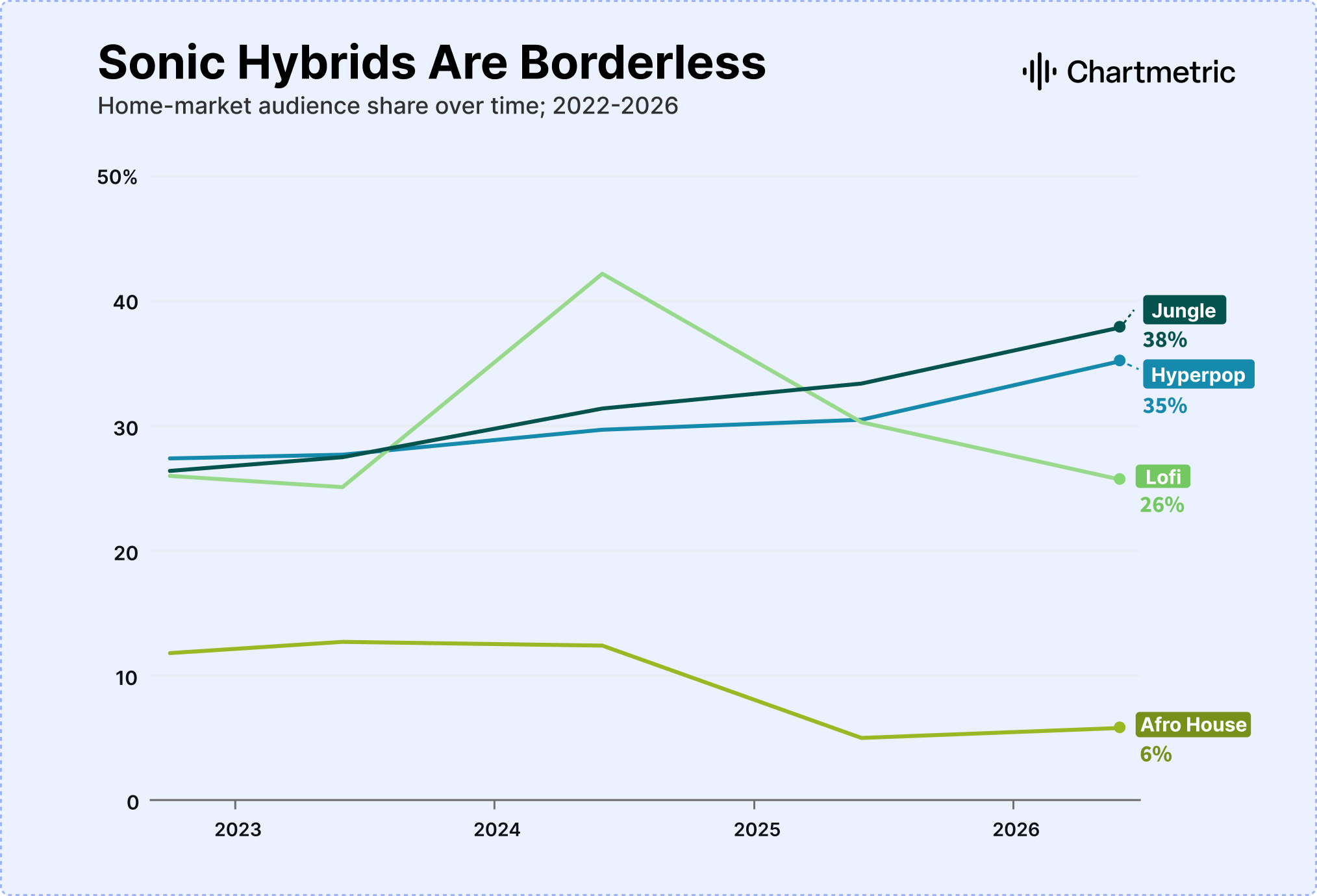
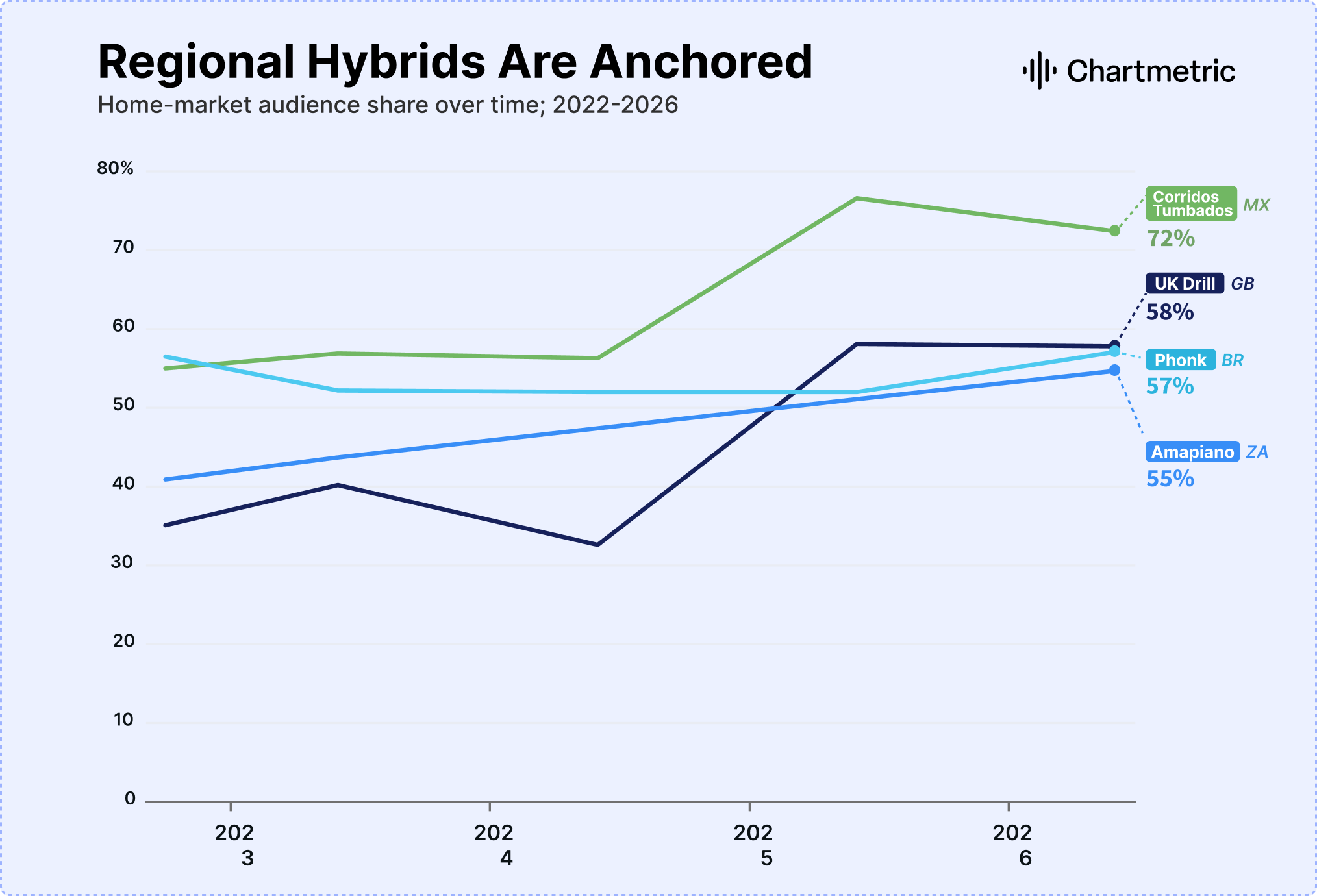
The report identifies these as two distinct models of genre growth: regional hybrids and sonic hybrids.
Producers Often Spot Trends Before Listeners Do
One of the clearest patterns throughout the report is that creator behavior frequently precedes mainstream success.
Genres often experience significant increases in producer activity before they appear among the industry's biggest artists. As creators begin experimenting with new sounds, those ideas gradually filter into commercial releases before eventually reaching streaming charts and wider audiences.
Once a genre breaks through, the cycle continues, with even more producers adopting and evolving the sound, creating a feedback loop between creators and listeners.
Every Genre Eventually Finds Its Place
Even the fastest-growing genres don't expand forever.
Looking across the past decade, many of today's biggest hybrid genres followed a similar trajectory: rapid experimentation, explosive growth, and eventual stabilization. Rather than signaling decline, that slowdown often reflects maturity as a genre becomes an established part of the musical landscape.
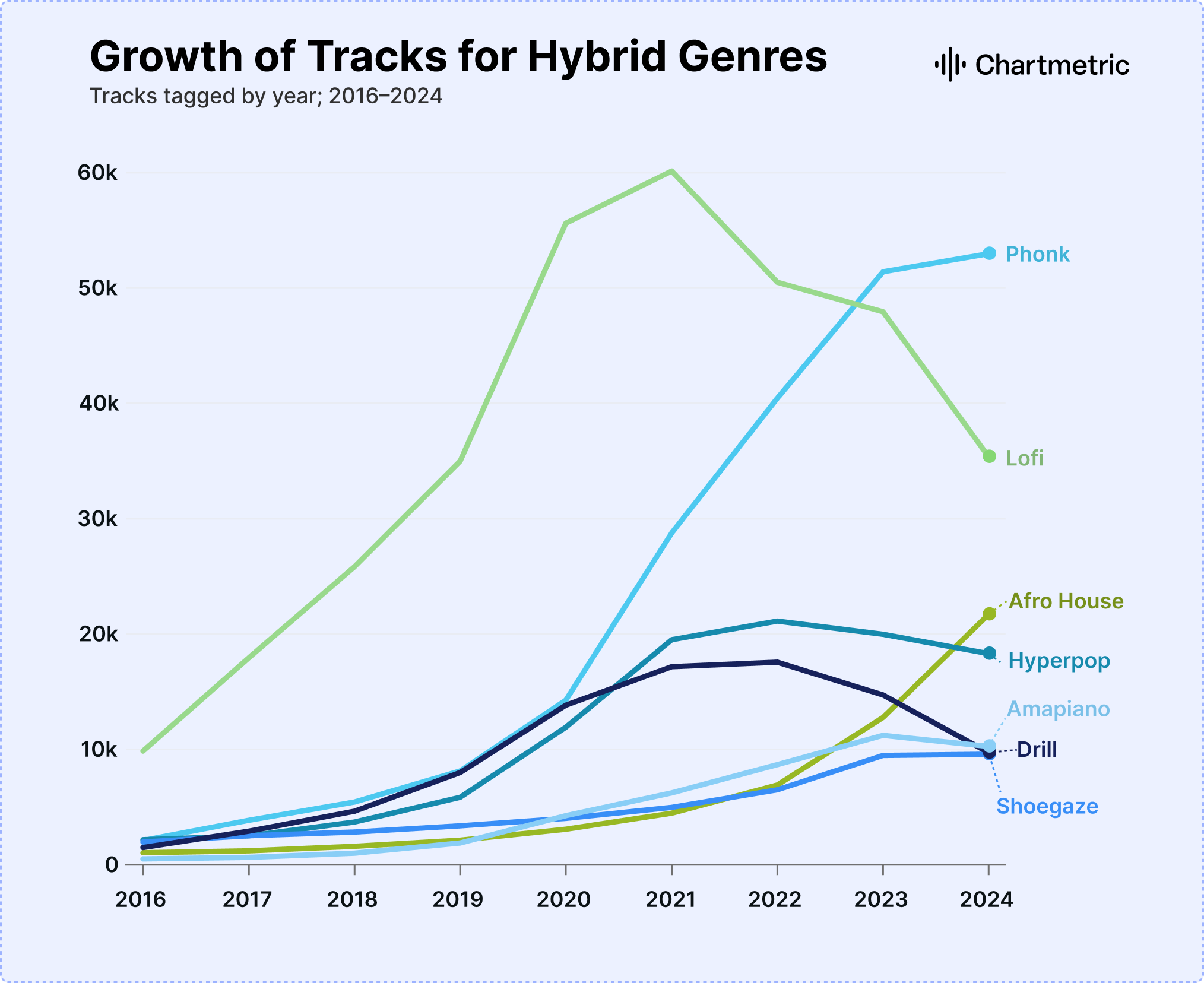
As one wave of genres settles into the mainstream, another begins forming beneath the surface, driven by creators experimenting with the next combination of sounds.
The Future of Genre Is More Diverse Than Ever
Taken together, the findings point toward a music industry becoming increasingly specialized. Genres aren't disappearing—they're multiplying into more distinct communities, cultural identities, and creative movements.
By combining insights from both listeners and creators, Chartmetric and Splice reveal that genre evolution starts much earlier than most people realize. The sounds shaping tomorrow's charts are already being built today, one sample, one production session, and one creative experiment at a time.