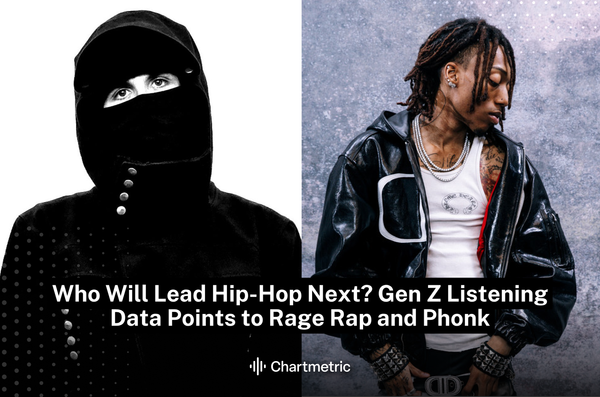

If one were to survey the complete history of hip-hop, Nas is undoubtedly one of the genre’s first modern leaders.
His 1994 debut album, Illmatic, defined the burgeoning culture with precise vocal delivery, sample-driven beats, and a relevant depiction of the Black youth experience on the streets of New York City. The album now sits in the Library of Congress for being "culturally, historically, or aesthetically significant."
Nas was also one of the first to say “hip-hop is dead,” when he released his 2006 album, Hip-Hop Is Dead. Per an interview with Pitchfork during that cycle, he declared:
“To me, hip-hop’s been dead for years. We all should know that.”
Well, apparently, 20 years later, everyone knows it. Numerous publications have explored the idea, and even major forces in the music industry are pushing the narrative of decline, albeit from a different perspective. Spotify just put up billboards saying “Hip-Hop Needs New Leaders,” as part of a recent marketing campaign.
Spotify’s take is relevant based on two facts. First, since 2024, there were two quarters when no hip-hop was in the Billboard top 10. Clearly, the genre is losing some steam. Second, leaders have historically emerged before a new sound takes over.
When rock overcame its laughable era in the 80s, Kurt Cobain and his iconic band Nirvana stood as the leaders of a darker, more emotional rendition called grunge. Similarly, even though EDM gets an even worse rap than 80s rock, Avicii’s bombastic, pop-friendly version of dance music permanently shifted the culture surrounding the genre.
The effect of these artists is primarily determined in hindsight vis-à-vis the successful peers that arose in their wake. Kurt Cobain and Nirvana led to heavy, emotional bands such as Pearl Jam, Soundgarden, Alice in Chains, Deftones, and, most directly, Foo Fighters. Avicii gave rise to other DJs fit for the main stage like Skrillex, Martin Garrix, and a bit further down the line, John Summit.
Now that hip-hop is losing a bit of luster, the time is ripe for new leaders to emerge. From the perspective of Spotify, the next leaders of hip-hop are likely to be artists who are already pulling big numbers. For their campaign, Spotify created a poll for users to vote on who is poised to be at the top. The options were as follows: Doechii, Baby Keem, Central Cee, GloRilla, BigXThaPlug, Lil Tecca, Rod Wave, and Sexyy Red.
Another historical measurement of future influence is popularity among the youth. Amit Nerurkar, Hip-Hop Ambassador at Bandcamp, believes the younger generations will determine who the next big thing is:
“They're gonna be your fans for a longer period of time, if you manage to convince them,” Nerurkar says.
Chartmetric tracks age demographics by the following ranges: 13-17, 18-24, 25-34. All of Spotify’s picks except for Lil Tecca and Central Cee are strongest in the 25-34 crowd, whereas the sounds resonating with the younger demographics suggest that the next leaders will come from somewhere completely different.
According to Spotify, the most popular hip-hop subgenres amongst 18-24-year-olds are, in order, Russian Phonk, Trap Metal, Rage Rap, and NYC Drill. For 13-17-year-olds, it’s the same four subgenres, except Trap Metal and NYC Drill swap places. Even just the titles of these genres immediately suggest more globalization and unconventional pairings.
Soundcloud has maintained a historically younger audience due to being conceived on the internet. Genre data from Soundcloud, laid against demographic data from Instagram, shows similar trends to Spotify: diverse sounds are in the lead.
Chartmetric grouped 3,020 artists on Soundcloud by their genre and tracked their growth over 90 days. Two of the fastest-growing genres were the same as two of the aforementioned most popular genres on Spotify: Russian Phonk and Rage Rap. The top three in order were Rage Rap, Brazilian Phonk, and then Russian Phonk, signaling a clear interest in genres forming outside traditional touchpoints such as the US and UK.
Pairing the artists in each of those genres with their Instagram profiles creates a correlation between age demographics because Instagram tracks age as well. For Rage Rap, Brazilian Phonk, and Russian Phonk, the largest age group was 18-24 across the board. Rage Rap and Russian Phonk also had the highest shares of 13-17 year olds.
While some studies suggest humans find their favorite music by 14, overall, the 18-24 demographic has more data across all channels than 13-17 year olds. Most likely because they have reached young adulthood and have the freedom to use Spotify and Soundcloud as they see fit. They can also attend shows much easier that 13-17 year olds, which is incredibly effective in raising the profile of young artists.
“Having 18-to-24-year-olds at your show is a great sign. The 24 to 35 crowd does, even if they hate on them, look to the 18 to 24 year olds to see what's hip,” Nerurkar says. “You want to win the 18 to 24 year old so that the 24 to 35 year old will spend money and come to your show and buy your records.”
From there, the question remains: Which artists in these youth-forward genres are poised to become leaders? UK rage rapper EsDeeKid seemed to have the potential. His Spotify monthly listeners exploded from 518k in June 2025 until they peaked at 22.6 million in February 2026. That’s a 4000% increase.
That same month, EsDeeKid featured on Yeat’s song “Made it On Our Own,” which came out on Universal Music Group, a major label. EsDeeKid’s monthly listeners have fallen by over 5 million since then, even though he’s returned to collaborating with fellow rage rapper Rico Ace, who was featured on almost all of his top streaming songs.
“There are some who will just come and hit, and then the question is whether they can stick,” Nerurkar contends, citing the need for industry backing to hold fast. “You have to win over two sets of people. One is the fan, who's the most important, because at the end of the day, they're gonna support your career, regardless of anything. You also have to win over the industry because they are the gatekeepers, and they're still gatekeepers.”
Except now, that’s why the narrative that “hip-hop is dead” is gaining traction. The tracks and artists that the music industry is pushing aren’t resonating with the youth. The lack of hip-hop on the charts is an indicator of this trend, and such an absence is a sharp drop off, considering that in 2024, Kendrick Lamar became the first artist in history to have three #1 debuts on the Billboard Hot 100.
Certainly, Kendrick Lamar is a leader within modern hip-hop. Beyond breaking these kinds of numerical records, his music is universally respected. In 2018, he became the first non-classical or jazz artist to win the Pulitzer Prize for music.
“When he did good kid, m.A.A.d city (2012), he had choices as to what he would do next, and he did To Pimp a Butterfly (2015). If you hear the album version of “i,” he talks about the N-word for a good two and a half minutes,” says Nerurkar. “He was like, ‘I'm leaning in as to who I am and where I'm from, and I will say what I want to say.’”
Under Lamar’s leadership, the genre generated $15.9 billion from streaming and music purchases in 2022. With that much money being passed around, it’s only natural that the music business will do everything to keep the cash flowing. From Nerurkar’s perspective, that involves folding into Lamar as much as possible.
“He’s managed to make everyone bend backwards to accommodate him,” Nerurkar says. That means when Lamar releases a new album, Nerurkar’s noticed Spotify will curate the majority of songs on Rap Caviar to sound like him. Major labels will do the same with their releases. “That's why fans are like, ‘Everything sounds the same.’ The shit that's being fed to you sounds the same, because the people who are feeding it to you do not want to take a risk.”
Consider some of the artists Spotify selected for their hip-hop leadership marketing campaign. One is Baby Keem, Lamar’s cousin. Another is Doechii, whom Lamar specifically endorsed. In short, more of the same.
“There are times when one sound dominates, but, naturally, as humans and as society, we get tired of something if there's too much of it,” says Jason Peterson, CEO of the diversified music company GoDigital. “Look at the movie business. We were overwhelmed with superhero movies, and society was like, ‘Let's do something different. What's next?’”
And now, what’s next is bound to be more globalized than ever. This is the first time in history that young artists have immediate access to every genre of music in the world, thanks to the internet. Everyone is being inspired by everything, which allows artists to fuel their music with more individual taste, and conversely makes it more difficult for one singular sound to take hold.
“What do you think the last global hit was? When you go to any culture, any language, they know that song, they're listening to that song.” Peterson posed that question to the Global Leadership Conference for GoDigital in the days before our chat. The answer may surprise:
“Nobody could come up with anything in the last six or seven years,” Peterson says. “I think we're going to see more fragmentation. The market's growing. I forecast the market will pass the height of CD sales on a real basis in 2033, but there's going to be more genres competing for the pie.”
With that greater culture of competition, current famous rappers who are inherently pigeonholed by the restricted listening access of their early years will seem limited. Who will emerge from this globalized market remains to be seen, but another fact is unavoidable:
The youth of today are adventurous. And they’re angry. Hip-hop is the exact genre they want to hear, even if they don’t realize it. When a new artist rises to lead, there will be an army of creative fans behind them.