
Turn complex music industry questions into data-driven analysis and actionable insights in minutes with Chartmetric Flow.
The music industry has access to more data than ever before. The challenge is knowing what to do with it.
Understanding why an artist is growing, identifying emerging talent, evaluating a new market, or building a release strategy can require hours of research across platforms, spreadsheets, and dashboards. And as the amount of available data continues to grow, turning all of that information into a clear answer can become a job in itself.
That’s why we built Flow, Chartmetric’s new AI agent designed specifically for the music industry.
After months of testing and feedback from Chartmetric users, Flow is officially live now. Powered by Chartmetric’s data across more than 14 million artists, Flow allows music professionals to ask complex questions in natural language and turn them into data-driven research, analysis, and strategy.
In other words, you don’t need to know where to look for the answer. You can start by asking the question.
What Is Flow?
Flow is an AI agent built specifically for music professionals.
Unlike a general-purpose AI chatbot, Flow can work through music industry questions using Chartmetric’s extensive music data. That includes signals across streaming, playlists, social media, radio, charts, and other areas of artist performance.
Instead of manually pulling together different metrics and trying to determine what they mean, users can tell Flow what they want to understand.
Ask a question like:
Why has this artist grown over the last six months?
Flow can work through the relevant data, identify the signals behind that growth, and turn them into an analysis.
But Flow goes beyond answering individual questions. It can take on larger research and strategy tasks that would traditionally require multiple steps, from discovering emerging artists to developing a marketing strategy around an upcoming release.
The goal is simple: take work that could require days or weeks of music industry analysis and help accomplish it in minutes.
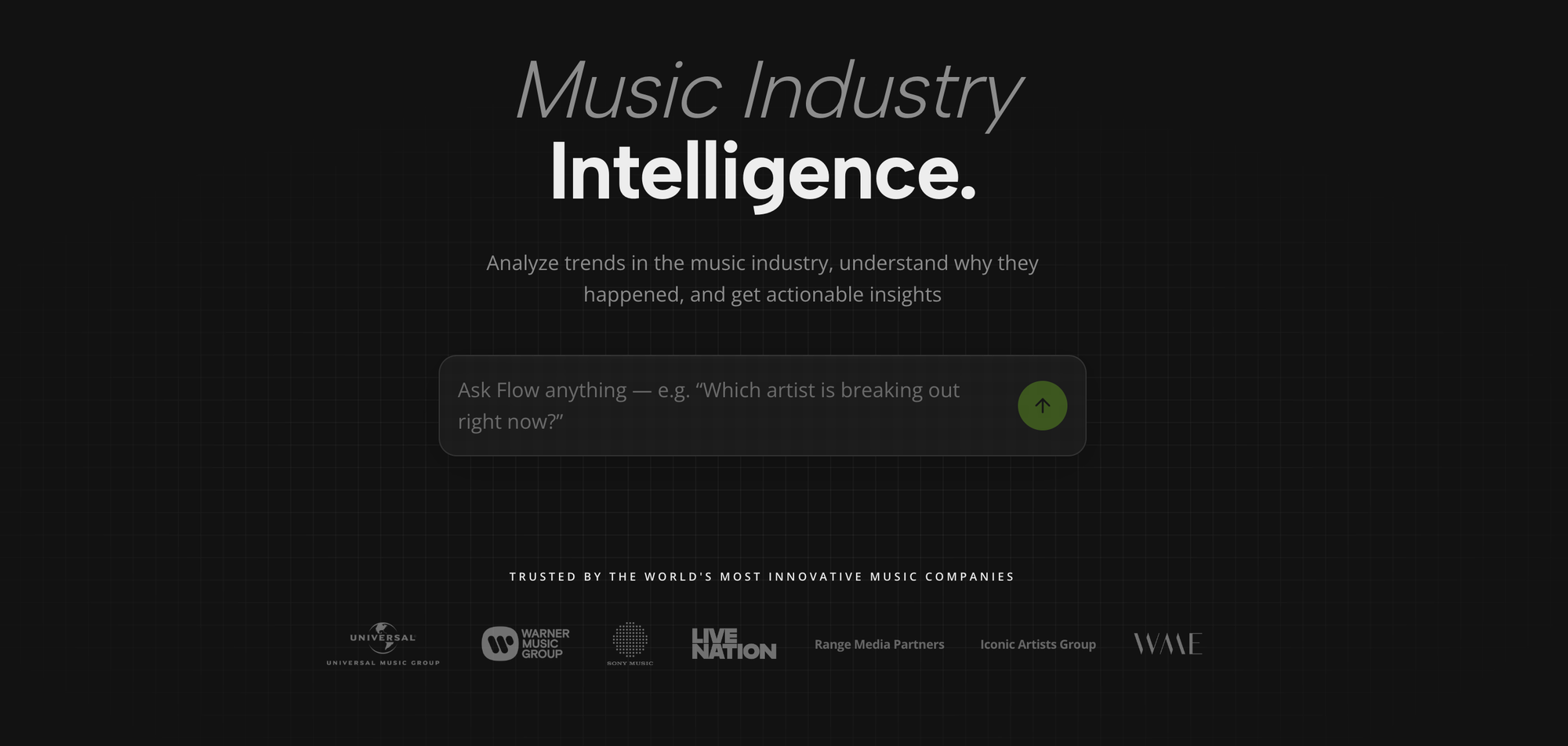
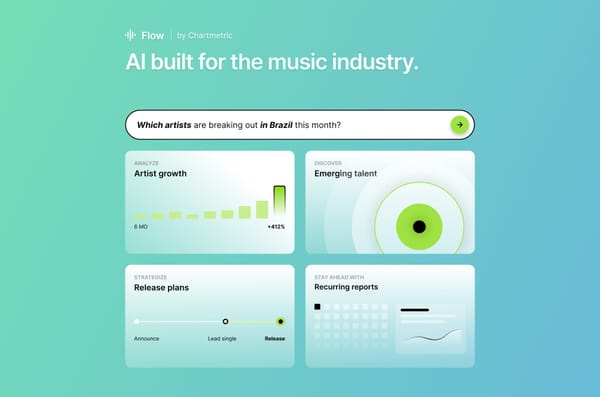
Analyze Artist Growth
Artist growth rarely comes from a single metric.
An increase in Spotify monthly listeners might coincide with playlist placements, TikTok activity, a breakout track, growth in a particular country, or several of those things happening at once.
Flow can investigate those signals together.
For example, rather than manually moving between different sections of an artist profile to understand a sudden increase in audience, you can ask Flow to analyze how, where, and why an artist is growing.
That makes it easier to move beyond identifying that something happened and begin understanding what may be driving it.
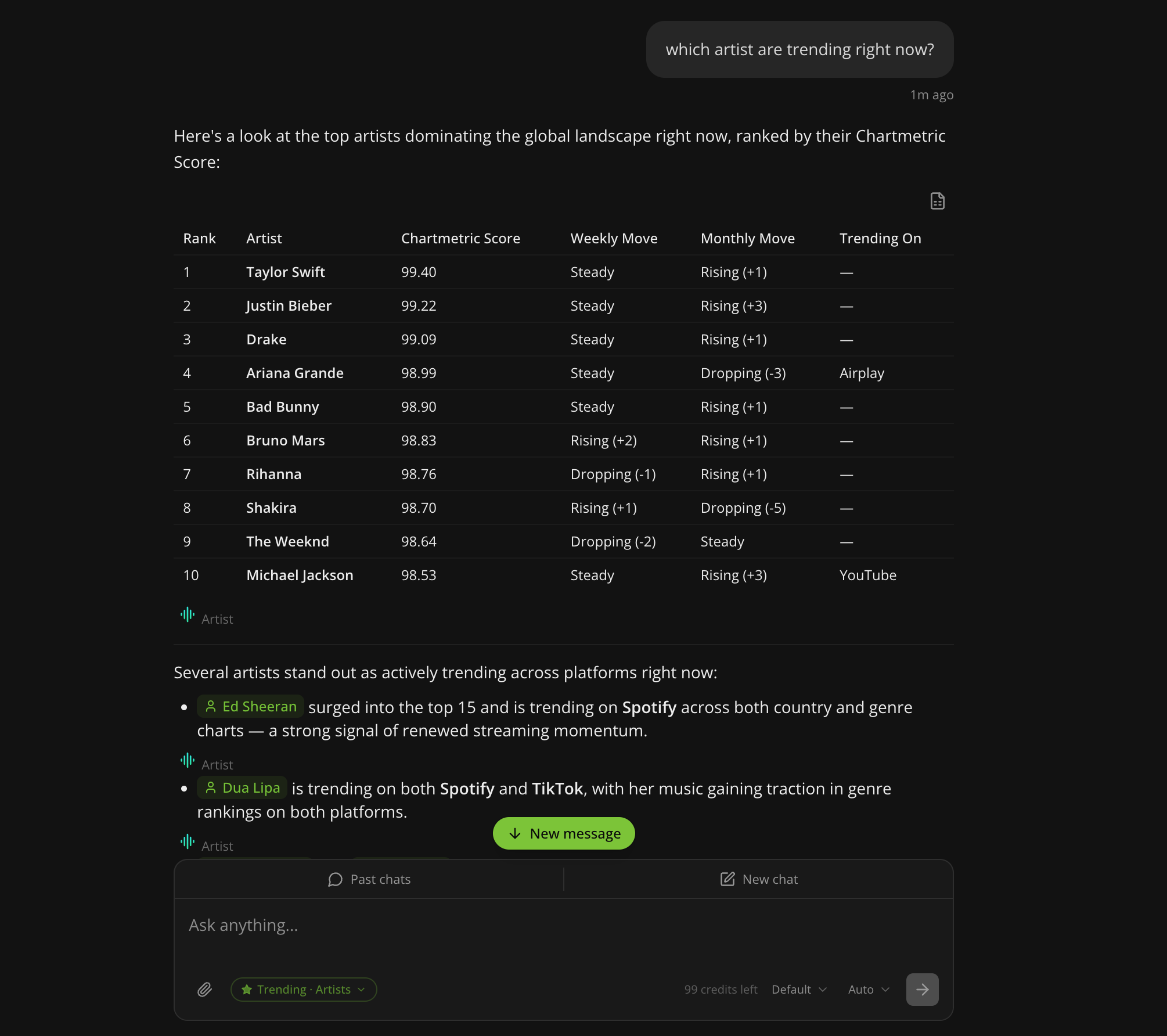
Build Music Marketing Strategies
Data becomes much more valuable when it can inform what you do next.
Flow can use Chartmetric data to help build marketing strategies around artists and releases. That could mean identifying markets where an artist is gaining momentum, understanding which platforms are contributing most to their growth, or finding opportunities that could inform a release campaign.
Instead of beginning with a blank document, teams can start with an analysis of the artist's existing performance and use those insights to inform their strategy.
For artists, managers, labels, and marketing teams, this can help connect music analytics more directly to decision-making.
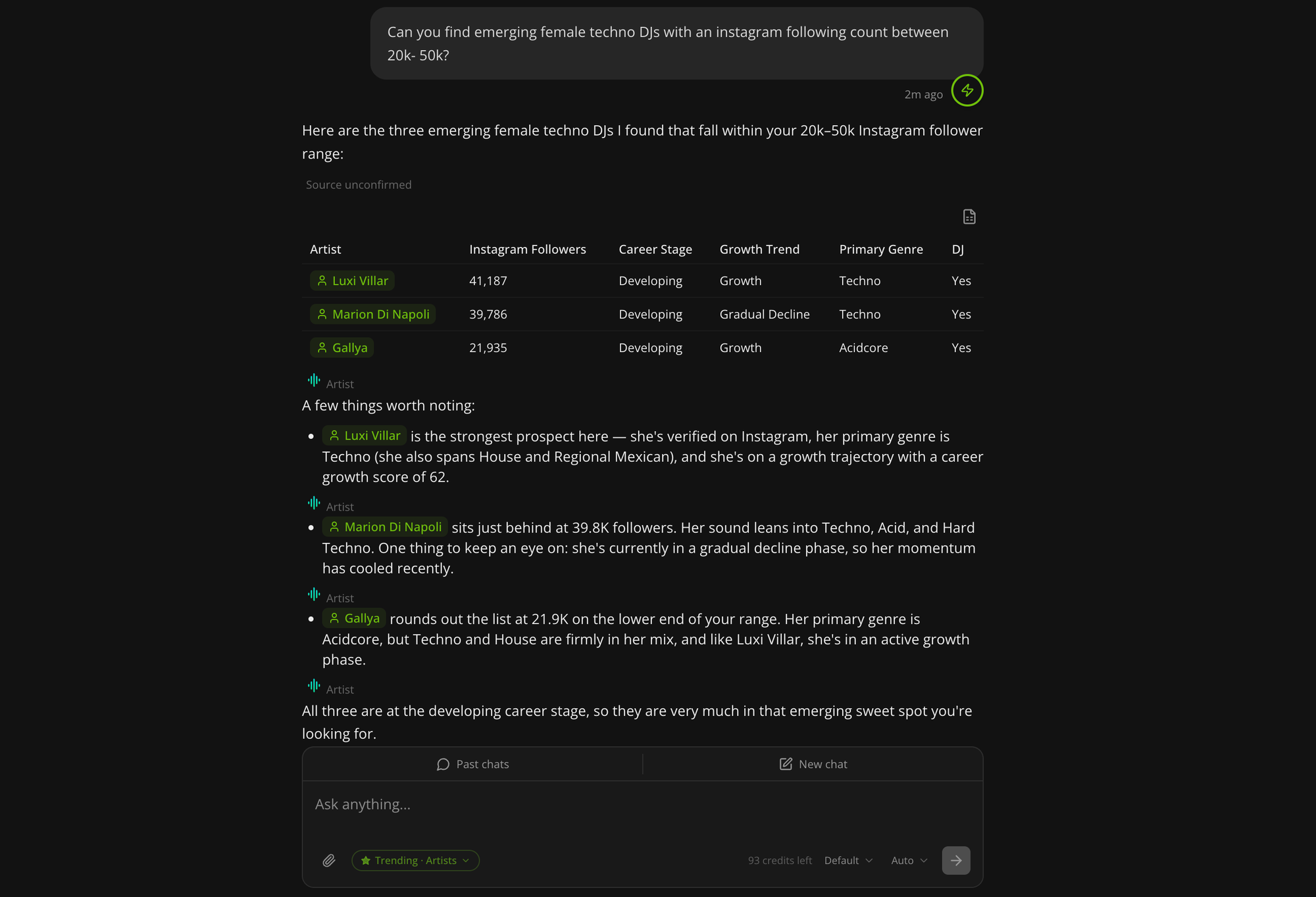
Discover Emerging Artists and Opportunities
With millions of artists and tracks competing for attention, music discovery is increasingly a data problem as much as a listening one.
Flow allows users to describe the type of opportunity they are looking for using natural language.
An A&R team, for example, could ask Flow to find emerging artists matching a particular set of criteria rather than manually working through individual searches and filters.
Flow can work across Chartmetric’s dataset to surface relevant artists and then help investigate the signals behind their momentum.
This means discovery can begin with an idea or question rather than a predetermined set of filters.
Create Recurring Reports
Keeping track of an artist or roster often means answering many of the same questions repeatedly.
What changed this week? Where is the artist growing? Did a release create meaningful momentum? Are there new markets, playlists, or platforms worth paying attention to?
Flow can generate recurring reports for priority artists, helping teams turn ongoing monitoring into a more streamlined workflow.
Instead of repeatedly gathering the same information manually, users can use Flow to bring the relevant signals together and focus on what has changed and what deserves attention.
Ask Music Industry Questions in Natural Language
Perhaps the biggest difference with Flow is how you access the data.
Traditional music analytics tools require users to know which metrics they want, where those metrics live, and how to interpret them together. Flow introduces another way to work with Chartmetric: ask for what you want to know, in the language you’re most comfortable using.
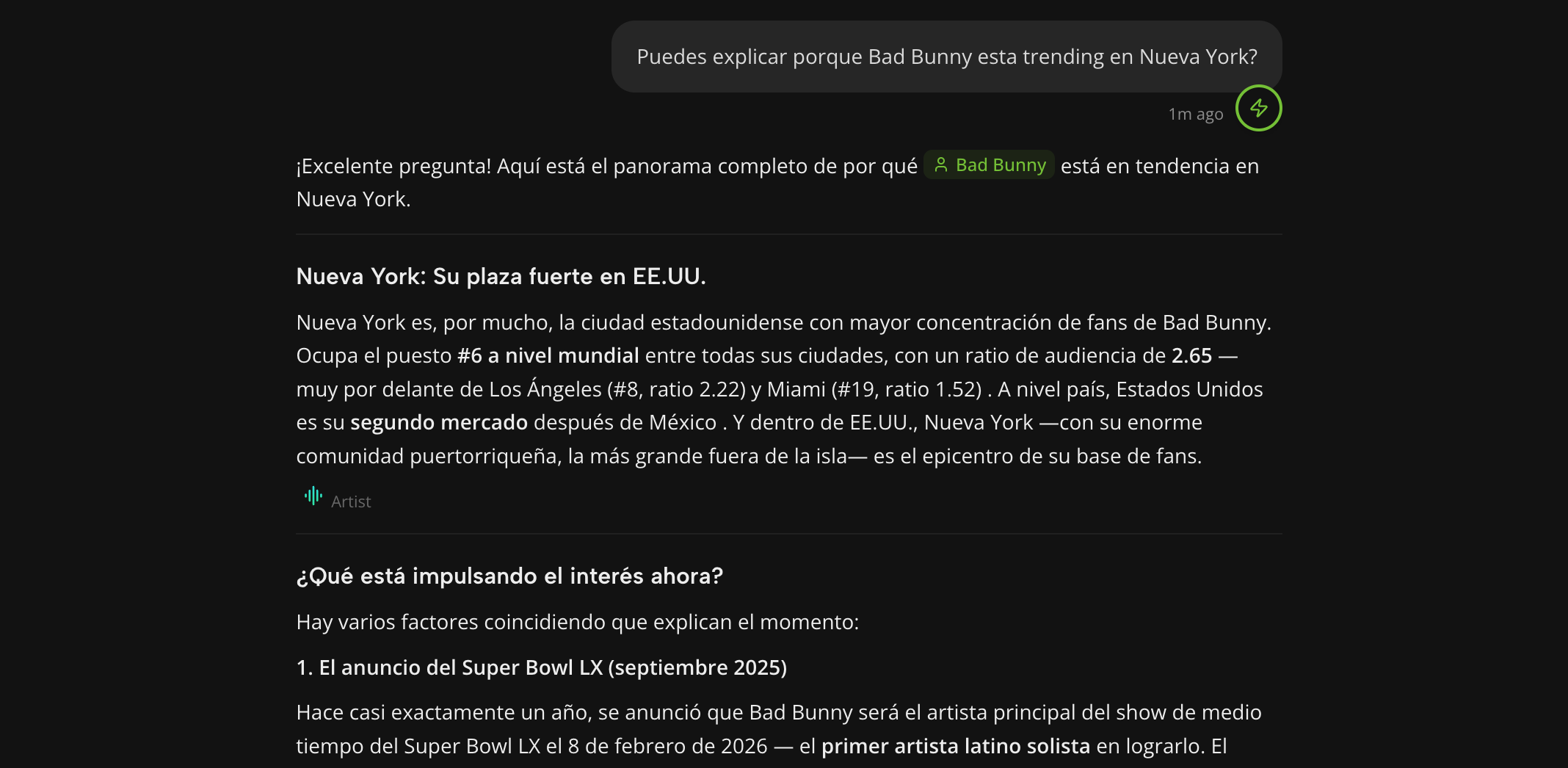
With support for multiple languages, Flow makes it easier for music professionals around the world to interact with Chartmetric’s data through natural-language questions. That could be a straightforward question about an artist or a much broader research task involving audiences, markets, genres, or emerging trends.
Flow then works through the available data to help produce an answer.
For experienced data users, that can make complex analysis faster. For people who aren't analysts—or who prefer working in a language other than English—it can make music data significantly more accessible.
Try Flow and see what your music data can tell you: https://flow.chartmetric.com/