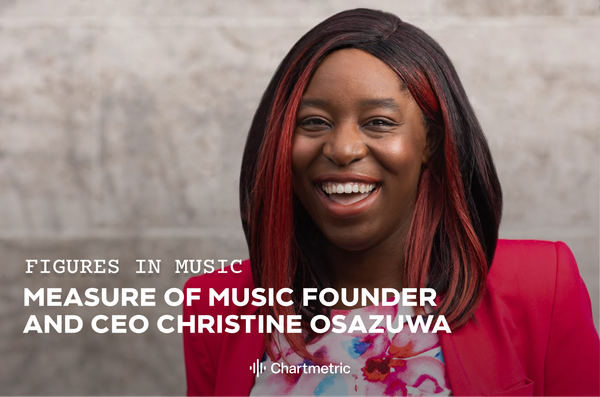

Christine Osazuwa is one of the key players directing the current conversation around music and data. Throughout her career, she has applied data expertise to various professional scenarios. She held top roles at major labels such as Universal and Warner and prominent startups like the ticketing and events platform, Shoobs. Today, she is working directly with the neoclassical composer Evgeny Grinko, leading his digital strategy.
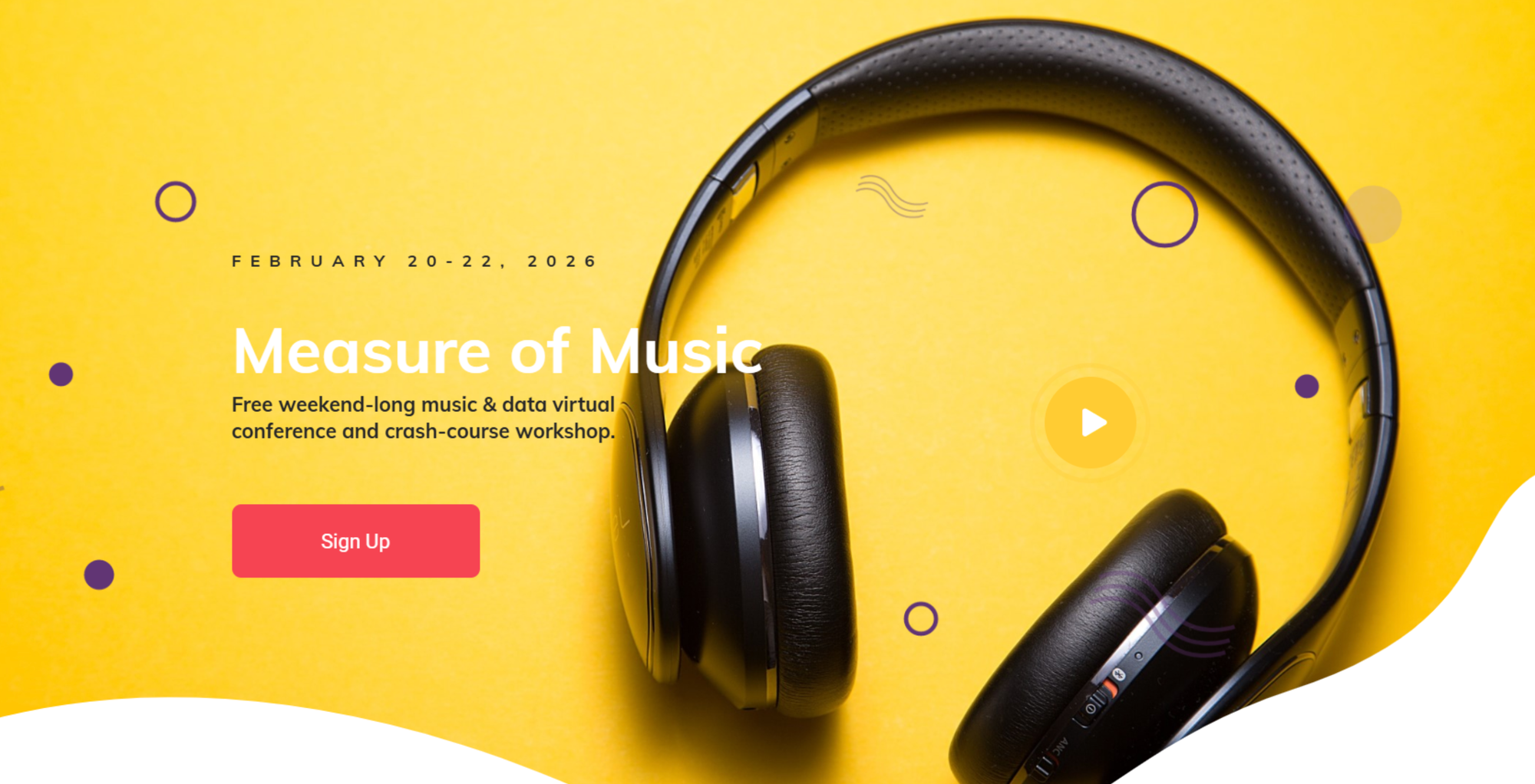
Osazuwa has also created Measure of Music, a virtual conference and hackathon, where the industry can learn all about the ins and outs of data. She hosted the first edition in 2021 for two main reasons. First, because in the thick of COVID, many industry professionals who had been laid off came to her for advice on how to engage with data to help boost their credentials. Second, the hackathon, which has produced notable programs such as GigAtlas, gives participants a chance to put their name on a project in a business where so often individual effort gets lumped into a collective whole.
“My resume doesn't say, ‘worked on the Ed Sheeran campaign,’ because every single person at Warner Music worked on the Ed Sheeran campaign,” Osazuwa says with a laugh. She got her start working on DIY punk shows, so she knows the value of building something yourself, and Measure of Music is an example. “The first version of anything does not need thousands of dollars. Step one is ‘How much can you do on your own before you need other people and a bunch of money to do it?’ You'll figure it out.”
Now thousands of people take part in Measure of Music. In 2025, there were 91 project participants, 36 speakers, 11 weekend staff members, 33 mentors, 19 judges, 17 sponsors, and almost 2,000 spectators. Throughout the last five years, professionals from Chartmetric, UTA, Spotify, and other major music industry forces have spoken alongside such well-known artists as Guvna B, Madame Gandhi, Brie Stoner, and YolanDa Brown.
Measure of Music 2026 will take place February 20-22. Click here to sign up, and read on to get an inside look into Osazuwa’s experience with data, how she recommends others use it, and what she sees coming in 2026.
How can artists without a dedicated team best use their data?
I'm always giving people guidance to look at the data with a question in mind. Where should I tour next? Who should I collaborate with? And then using the data to answer those questions.
The three platforms I focus on when I do workshops are normally Chartmetric, Spotify for Artists, and YouTube Analytics. These platforms are the same tools that the professionals are using.
Chartmetric is aggregation. Social media and playlisting being aggregated is really nice, and so I use that as my “everything else” situation. Spotify is an audio-only platform that has the widest breadth because it has a free and paid tier. YouTube is audio and visual. No other platform has that. YouTube actually has the richest analytics of all the different built-purpose DSP tools.
 Chartmetric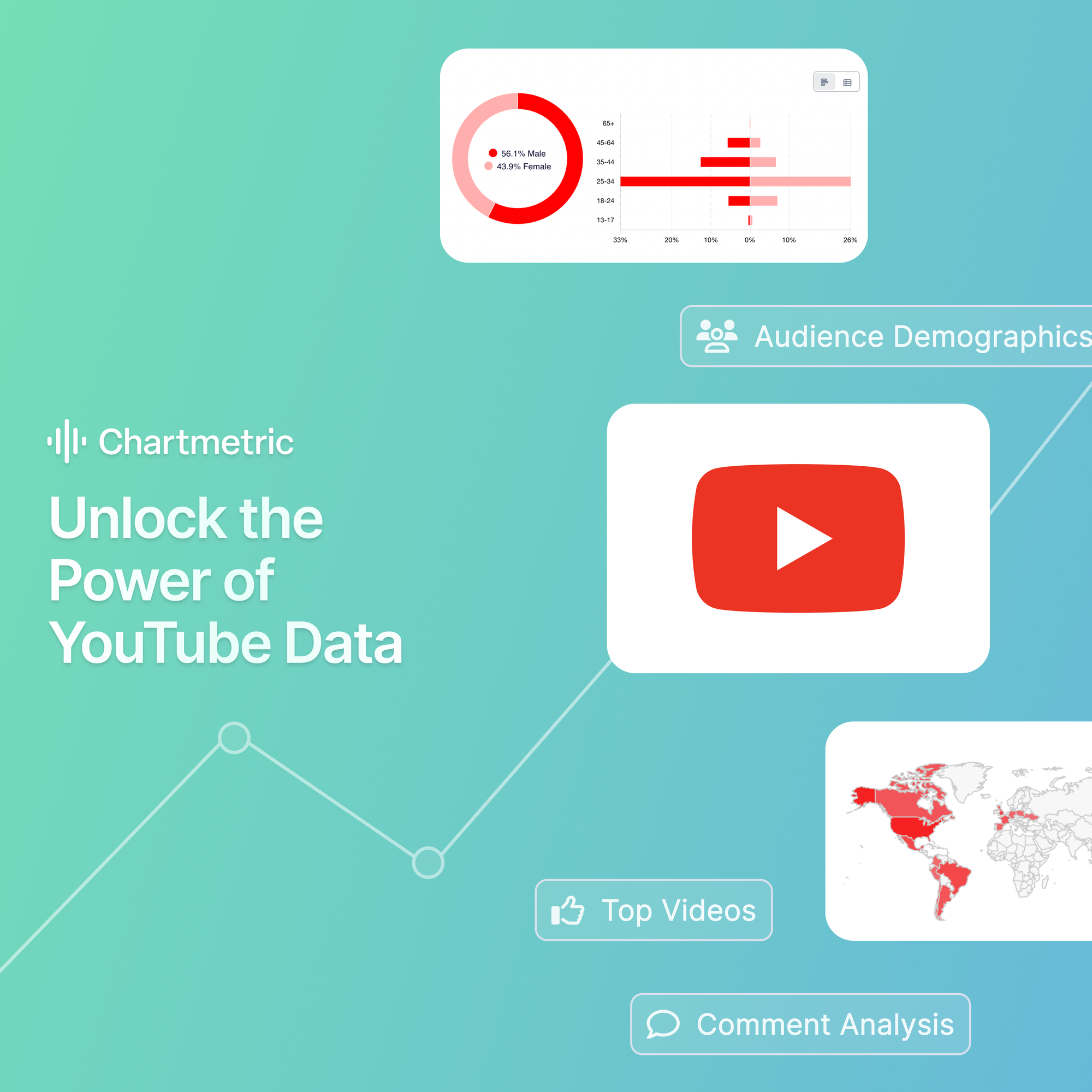
But it’s also very dependent on who you are as an artist. If you are a French artist, Spotify might not be the answer. The answer might be Deezer. So part of it is the platforms that make the most sense for you, depending on your region or what your audience is listening to.
How did you apply data when you were working at major labels?
When you're at the major labels, a big area is scale. Of the literally thousands of artists we signed, which ones do we have the resources to focus on? The way labels function is that there's a central team, and there are sub-labels focused on every single release coming out. I have worked on both an individual country basis and a central team.
Because we have access to the data, every track was being considered. A sublabel might pitch five priorities [to the central team]. Then we look at the five priorities from four of the sublabels, and a couple from international. But with the availability of data, we can look at the entire repertoire at once.
We can filter and see who's had the most growth in the last quarter. It might not have been someone that people had on the radar. Something might have happened on TikTok that someone didn't see. The data makes it more democratic. There's less favoritism.
What sort of advice do you give startups on using their data?
My first conversation is figuring out their target audience because things are so complicated in the music industry. Is your target audience artists, other businesses, or consumers? The data you need will vary wildly.
If your target audience is artists, you're gonna be looking at stats for upcoming artists. If it's fans, you're probably looking at social media. If it's B2B, you're gonna be looking at platforms like ROSTR, which aggregates different businesses working with the artists.
Then it’s a lot of “stop trying to reinvent the wheel.” A lot of people in music are using all the same tools. So, if a startup is B2B focused, it has to figure out how to integrate with those tools, because it's very unlikely it’s going to replace them.
Why do you think it's beneficial for music professionals to understand data on a general level?
Every year, I speak at the Berklee Valencia music business program. I was talking to a student who participated in Measure of Music. She said it ended up being really beneficial when she got her internship at a label because every job is just Excel.
If you work at a label, the amount of your job that is just some form of Excel is shocking. So, at the very minimum, being able to use Excel really well is really handy if you supplement that with being able to understand the data.
Part of the reason I structured Measure of Music with real companies that people are actually using is that a lot of people want to break into the music industry, no matter what stage. From students all the way up to senior execs. They might have a background in marketing, sales, or biz dev, but they don't have the music industry background.
So the idea was for people to know how Chartmetric works when they’re getting interviewed. It's really handy for getting hired, and once you're in the job, it's how you get your work done much faster.
Are there any trends you see that are poised to shape 2026?
We're going to go offline. You're hearing stats around how many people are leaving dating sites and social media. There's been a really big push for more diverse, in-person experiences.
 Harry Levin
This trend is important when you're building out artist campaigns and experiences. Thinking about how fans are not just coming to your concert, but what opportunities are there for fans to come together?
With experiences moving away from the internet, how can data be used effectively in these scenarios?
This is one of the areas where smaller artists have so much more ability to manage. When I see people going offline, they are also being less public. There are a lot more Discords, which are private. You have to join WhatsApp groups, rather than things that are open to everyone.
If you are an indie artist or working on a small artist’s team, it's really easy to keep track of the Reddit and Discord that happen to exist. It's really easy for you to run a WhatsApp community and engage with your fanbase, in comparison to trying to do that for a thousand artists at once.
The internet is still how people aggregate to go off the internet. There's really not a whole lot of other spaces to do that. People are building a community on the internet, but a lot of it is now building community to go off the internet, and you have to monitor and see what's happening.
All these ideas of more sheer community transferring from online to offline and then back again, is a really interesting cycle that can help people A, find out more about their fanbase, and B, reward fans.