
Live music is in an exciting time, to put it mildly. Live Nation was just hit with the landmark verdict affirming that its union with Ticketmaster constitutes an illegal monopoly. Major artists, including Post Malone, Meghan Trainor, and ZAYN, are ostensibly falling victim to the phenomenon known as “blue dot fever,” cancelling large-scale tours over low ticket sales.
Yet the value of the market grew to $18.51 billion last year because attending concerts and festivals remains universally adored. That’s where JamBase comes in. The JamBase database has information on hundreds of thousands of events of all genres, all around the world. Users can buy tickets, plan ahead with a calendar, get custom recommendations, read articles about live music, and even play games testing their knowledge of different artists.
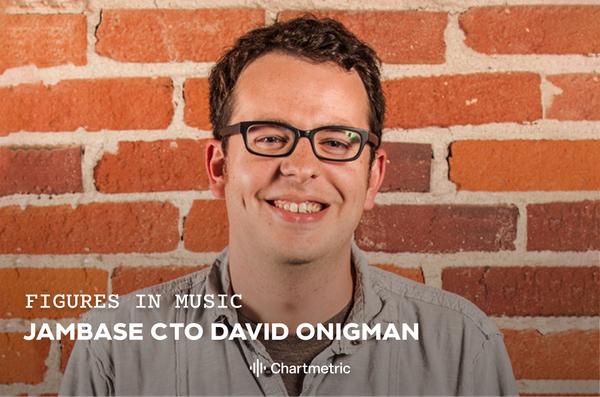
“At JamBase, we like to say we are using the internet to make people not use the internet,” says David Onigman, Chief Technology Officer at JamBase. “We are using the internet to try to get people to go see live music, so the artists have an audience, and the crowd has the ability to share in that communal experience of being in the same room as other people who love the same music and artists.”
Below, Onigman discusses how JamBase gathers live event data, how they adjusted for the pandemic, and which genres are on the rise in the live market.
How many total events are on the site on any given day?
Peak concert season is Memorial Day to Labor Day. So our highest concentration will always be there, but we're hovering north of 100,000 upcoming events globally. That's a combination of standard concerts and music festivals.
What is the rhythm of events being added and removed as they happen?
It's normally 2,000 to 3,000 per day. How much is going in and how much is going out largely depends on the day of the week. The music industry marketing people and publicists love to announce on Monday, Tuesday, and Wednesday, so they can set up a pre-sale that starts on Friday. That’s when we're putting on our battle gear, knowing we need to look at all the data that's coming in and make sure it's correct. Later on in the week. The automated process is removing more because the shows are happening on Thursdays, Fridays, and Saturdays, with a higher frequency.
How have total listings on JamBase bounced back since the pandemic?
The pandemic was such an interesting time for us. We had to pivot on a dime. April of 2020 through the end of 2020 was spent setting up new ways to ingest data and crowdsource information on virtual listings and live streams. We also had those shows that were drive-ins, and we had the shows that were in pods. All those things are little pieces of data that got introduced during that time.
Our listings have certainly come back stronger than ever, post-pandemic. But that also is because we have been continuing to work with more and more ticketing companies that are providing us with their data.
I actually know a lot of DJs who turned Twitch into their career! Do you have any sense of the average number of virtual events and drive-in shows on the site during the peak of the pandemic?
That's so great! We like to look at an artist's journey through data, and there are so many interesting things about plotting data during COVID that we have to control for. Those drive-in pod shows make it look like an artist was playing a much larger room than they actually were. They were playing the Westville Music Bowl, but the capacity was 300, so maybe that shouldn't be something you factor into an average.
We also talk a lot about the artists who emerged victorious coming out of the pandemic. They spent a lot of their bandwidth wisely, creating the best content during COVID, and were able to come out in 2022 in a much more formidable position. Playing much larger rooms than they were in 2019-2020.
What parts of the world have the most event listings on JamBase?
We consider ourselves to be a truly global dataset. When we started 27 years ago, things were very United States-focused, but as we've been able to onboard ticketing feeds from all over the world, we're now truly global. On an upcoming events basis, our strongest markets right now are the United States, the United Kingdom, Germany, France, Canada, and Spain.
There are always markets and ticketing companies that we are looking to work more closely with to better represent that. We will work with any data feed that is within our constraints. We do a lot of enhancements to the data that we get, even if a feed that we're looking at doesn't out of the box tick all the boxes that we wish it would.
We’re seeing a lot more attention on different regions such as South Korea, India, and Latin America. Have you seen more listings in those areas?
We certainly made the decision, over a year ago, that K-pop was deserving of its own top-level genre inside the JamBase database. We are definitely seeing a real uptick in events and interest in India and are working closely with a ticketing company there that we hope to have fully onboarded soon to round out those listings.
What are your core methods of finding live event data for JamBase?
Primarily, the data is from the ticketing companies. We are working with dozens of them, and have even more that we're talking to to get their data flowing into JamBase.
Another way is JamBase Manager. That allows either the artist or the venue to go in and claim their profile, and add or modify any events that we didn't get through a ticketing feed. Maybe it is at a very small brewery that doesn't have any integrations with any of the ticketing companies that we do.
We do still have super users of the platform who use it to plan their entire live music life. If we're missing a show in their area, they can still go in and fill out a form and add it.
The final way is that we are feeding the beast and adding events ourselves if they're not coming in. We have an entire side of the business that is the news. It's our writers writing about what's happening in the world of live music.
If a tour gets announced (I bet some have gotten announced in the last 22 minutes since I've been talking with you) and we see the press release, or we see it on the band's website or on social media, we'll add it ourselves so that we can get it in the database as soon as possible. Then, when all the different ticketing links start coming in, they all will get attached to that master record that we have.
Which genres have had the largest presence on JamBase historically, and how has that changed over time?
We certainly have seen EDM and K-pop grow significantly in our database over the last three to five years. Christian music is also a rising genre in our database. Our taxonomy is set up such that an artist can frequently belong to multiple top-level genres on Jambase. Some of that is also the thumb on the scale for certain genres that are likely to cross both. We have classified that artist as an indie artist and a rock artist, and they're getting counted twice there. Or as a jam band and a rock artist.
At Bandcamp, artists pick their own genre. So, #1 is electronic, but they told me that’s usually because electronic is combined with something else.
For our genres, we keep it pretty macro. We integrate with Spotify's platform, and you see so many interesting micro-genre tags on their stuff. We're sitting at a cool 20. K-pop was the 20th. I love post-rock. I love shoegaze. When it comes to things like that, we think it's better when you have a JamBase account, and you've given us some indications on artists that you'd like by tracking them on our platform. That's when we can really give you a profile based on related artists and not a top-level genre.
What are some interesting trends you’re seeing in live music?
One trend we are keeping a very close eye on is the relative volume of cancellations, postponements, and venue changes. There is a lot of industry attention on that right now. Was this tour routed the correct way? Did this promoter try to put this artist into venues that were too large or too small?
National publications are talking about what people are calling “blue dot fever.” Gazing at a seating chart of a concert that is not selling well. So, a trend that we're really trying to follow and work more closely with our partners to help solve is the right-sizing of these venues and ticket prices.
We're tracking ticket pricing over time more closely than we ever have. It used to be that when a concert was announced at $35, it was $35. But now it's not even just the secondary market where the ticket prices are always changing. It's the primary markets, as well. More of this pricing has become dynamic.
Trying to apply real data and analytics to that blue dot fever, and not just have it be, ‘I took a screenshot of this concert that's not selling well, what were they thinking?’ But trying to look at it more from an analytical standpoint, and say, “Why is this happening? Maybe this actually isn't a bad thing. Maybe this isn't as bad as it looks.”
Historically, these tours pick up in the last two weeks before the event, etc. So, really paying really close attention to, sort of, all trends on cancellations, venue movement, things like that.